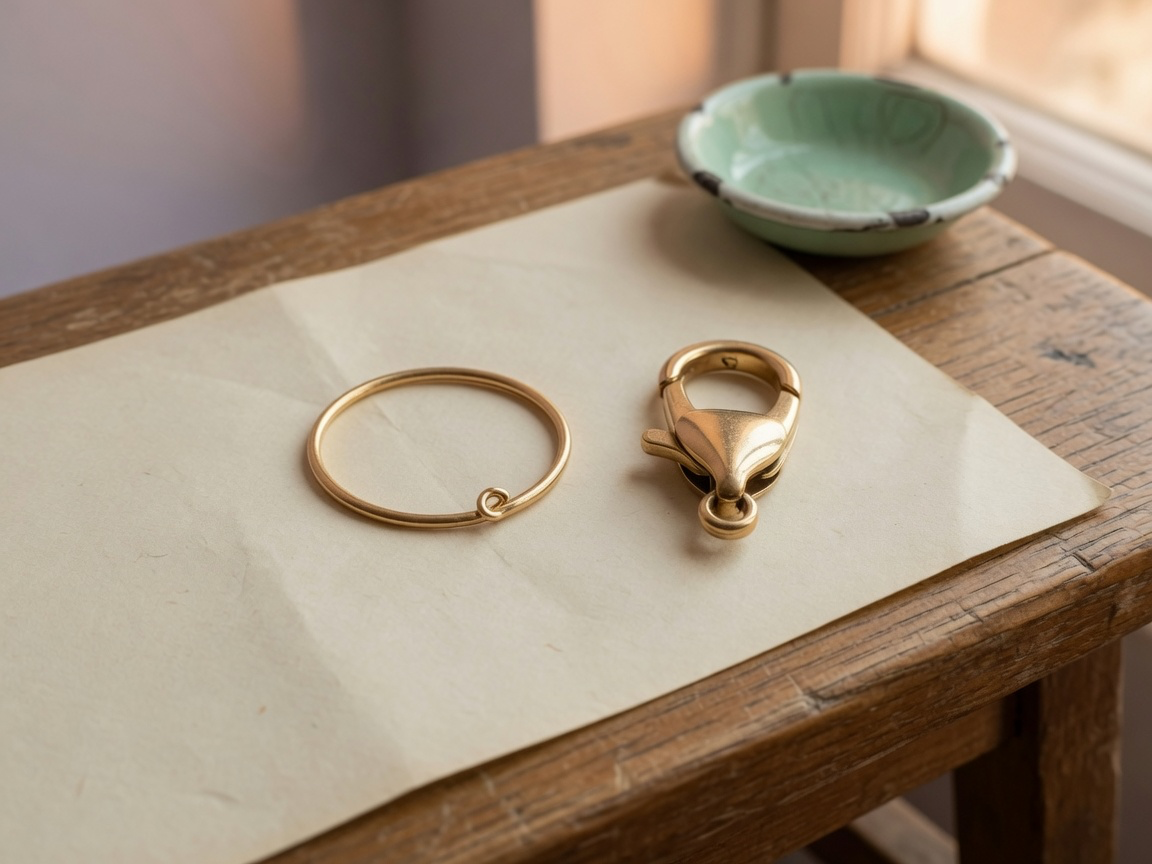
One comparison on this hub: the join of a dangle, jump ring versus lobster clasp. Read the hang as ring, then plate, then letter. Cited from the International Gem Society.
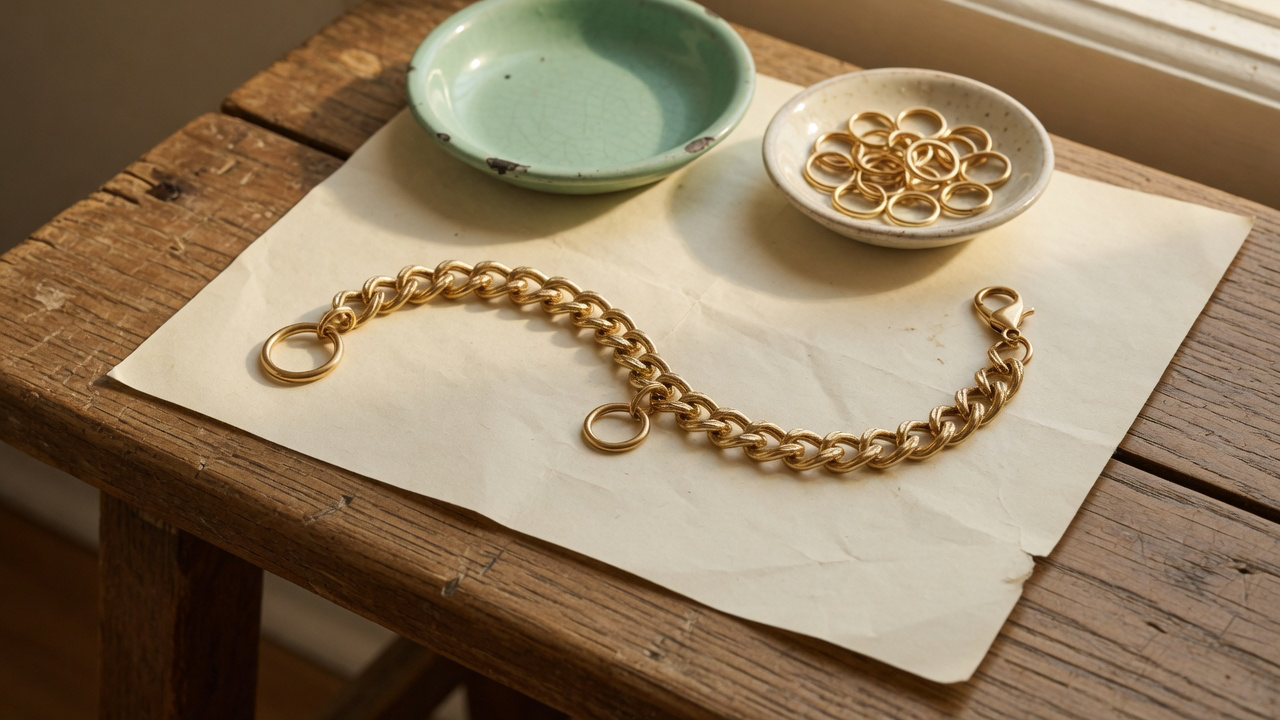
The IGS findings lesson treats a jump ring as the simplest connector: an opening along the ring, twist it, slide a plate hole on, close it. Solder if you do not want it to pull apart. The IGS bracelet-and-necklace lesson names a lobster clasp as the strongest type of clasp, with a lot of metal in the pincer. A finished chain normally has a clasp at one end and a simple ring at the other. That sentence is the starter: lobster on one end, ring on the other, hang in between.
Get this jump rings if the plate should stay on the hang. Get this a lobster clasp if the letter should unclip.
IGS also notes a spring-ring as the lighter closer, and that the spring can stick. A hook-and-eye is simpler still, and that same lesson warns it is a poor match for bracelets because it can unhook in wear. A split ring is a double circle of wire, like a key ring: slower to change, harder to lose. Name a lobster if you want the letter to unclip. Name a jump ring if it should stay on the hang.
The nested lecture is Jump ring vs lobster clasp. The dangle-starter kit is the cluster this comparison decides a join for: ring gauge, clasp type, letter, starter strand. Shop is the listing. The join is below. A spring-ring is the lighter closer, and that IGS lesson notes the spring can stick. A hook-and-eye is simpler still, and a poor match for a bracelet that has to stay shut on a walk. Name the join, then the letter. One charm holds the trip. Write sales@tabaconda.com if you need a set.